Examples of successful tech exits: 2026 founder guide


A successful tech exit is defined as the sale, acquisition, or public listing of a technology company at a valuation that delivers material returns to founders and investors relative to capital deployed. The most instructive examples of successful tech exits in 2026 share three traits: proprietary assets that are hard to replicate, high net revenue retention, and a competitive sale process that drives price. Skio, Confluent, and Wiz each demonstrate these traits at different scales. Studying their outcomes gives you a concrete framework for your own exit planning.
1. What defines a successful tech exit in 2026?
The industry term for evaluating exit quality is “exit multiple,” expressed as a ratio of acquisition price to annual recurring revenue (ARR). Strategic acquirers pay 8x to 30x ARR for companies with proprietary data assets and workflow integrations that cannot be replicated within 18 months. That range is wide because the specifics of your business determine where you land within it.
Three factors push a company toward the top of that range:
- Net Revenue Retention (NRR) above 110%. This signals that existing customers expand their spend over time, which reduces acquisition risk for the buyer.
- A clean cap table. Complicated ownership structures introduce legal friction and compress multiples during due diligence.
- ARR in the $5M, $50M band. This sweet spot balances meaningful revenue contribution with manageable integration risk for strategic buyers.
Sector matters too. Tech exits commanded premium valuations when focused on AI, cloud, and security, because these sectors address critical bottlenecks for large enterprises. A SaaS tool in a commoditised category will not attract the same multiples as one embedded in a buyer’s core infrastructure.
Pro Tip: Build your exit narrative around the cost of replacing you, not the cost of building you. Buyers pay for irreplaceability, not effort.

2. Skio: the capital-efficient exit that redefined founder returns
Skio is the clearest recent proof that capital efficiency is a valuation multiplier in its own right. Skio was acquired for $105 million in cash after raising only $8 million and reaching $32 million in ARR. That represents a 13x return on invested capital, a figure that most VC-backed companies with ten times the funding never achieve.
The mechanics behind that outcome are worth unpacking:
- Product-led growth. Skio acquired customers through product quality and word of mouth rather than paid acquisition. This kept the cost base low and margins high.
- Minimal dilution. Raising only $8 million meant founders retained a large ownership stake. The $105 million cash price translated directly into founder wealth.
- Clean financials. Low burn and high ARR growth made due diligence straightforward, which shortened the deal timeline and reduced the risk of price chipping.
“The best exit is the one where the buyer needs you more than you need them. Capital efficiency is how you get to that position.”, Skio’s outcome illustrates this principle precisely.
The contrast with typical VC-backed exits is stark. Many companies raise $50M or more, dilute founders to 15, 20% ownership, and sell for a headline number that sounds impressive but delivers modest founder proceeds. Skio’s founders kept control and captured the majority of the exit value. For founders currently in the $5M, $15M ARR range, this is the most relevant tech startup exit example of 2026.
3. Confluent and Wiz: strategic acquisitions driven by enterprise data
The two largest notable tech company sales of early 2026 were driven by the same underlying logic: enterprises will pay a premium to own infrastructure they cannot afford to lose.
IBM acquired Confluent for approximately $11 billion, paying $31 per share in cash. Confluent served over 6,500 enterprises, including 40% of the Fortune 500. Its real-time data streaming platform had become critical infrastructure for enterprise AI and hybrid cloud environments. IBM did not buy Confluent’s technology. IBM bought the switching cost that 6,500 enterprises would face if they tried to replace it.
Google’s $32 billion acquisition of Wiz followed the same logic in the security sector. Wiz provided critical cloud security across multi-cloud environments, and the deal attracted multiple bidders. That competitive tension justified a 30x ARR multiple.
| Company | Acquirer | Deal value | Key value driver |
|---|---|---|---|
| Confluent | IBM | ~$11 billion | Real-time data streaming for 6,500+ enterprises |
| Wiz | $32 billion | Multi-cloud security with multiple competing bidders | |
| Skio | Undisclosed | $105 million | Capital efficiency, $32M ARR, 13x return on capital |
Pro Tip: If your product is embedded in a buyer’s daily operations and switching would cost them six months of engineering time, you have a moat. Document that switching cost explicitly in your acquisition materials.
The lesson from both Confluent and Wiz is that proprietary data assets create defensible positions that strategic buyers will pay to own outright rather than attempt to build internally.
4. Comparing exit routes: strategic sale, PE, and IPO
Not every founder wants a strategic acquisition. The right exit route depends on your timeline, your ownership goals, and how much operational disruption you can absorb.
Strategic acquisition
A strategic buyer acquires your company to integrate your product, data, or customer base into their existing business. Strategic exits can close in 6, 9 months when the buyer has a clear integration thesis. The trade-off is that you typically lose operational independence quickly after closing.
Private equity acquisition
Financial sponsors acquire companies to improve operations and scale revenue for a secondary sale within 5, 7 years. PE buyers focus on reducing marketing waste, improving unit economics, and building a repeatable growth engine. Founders who stay on post-acquisition often retain an equity stake in the restructured business, which creates a second liquidity event. The timeline for a PE sale runs 15, 18 months from first contact to close.
IPO
An IPO delivers the highest potential valuation ceiling but requires 18, 36 months of preparation. You need audited financials, a board with public-company experience, and a growth story that holds up to quarterly scrutiny. Most founders in the $5M, $50M ARR range are not IPO candidates. The path is relevant for companies above $100M ARR with predictable growth.
| Exit route | Typical timeline | Founder outcome | Best suited for |
|---|---|---|---|
| Strategic acquisition | 6, 9 months | Full exit, loss of independence | Founders seeking clean break |
| Private equity | 15, 18 months | Partial exit, second bite | Founders wanting continued upside |
| IPO | 18, 36 months | Partial liquidity, public scrutiny | High-growth, large-scale businesses |
The best practices for tech exits consistently point to one preparation step that applies across all three routes: start building relationships with potential buyers or investors at least 18, 24 months before you intend to exit.
5. How to build the assets that drive acquisition value
Exit value is built before the sale process begins. The companies that achieve the highest multiples spend years constructing assets that are genuinely difficult to replicate.
Workflow integration is the most powerful of these assets. When your product sits inside a buyer’s daily operations, removing it creates disruption that costs more than the acquisition price. Confluent achieved this by becoming the data backbone for Fortune 500 AI pipelines. Wiz achieved it by becoming the default security layer across multi-cloud deployments. Both companies made themselves structurally necessary.
Proprietary data is the second major driver. A dataset that took years to accumulate and cannot be purchased elsewhere commands a premium because it cannot be rebuilt quickly. This is why patent and data strategy matters well before an exit process starts. Protecting and documenting your data assets gives acquirers confidence and gives you negotiating leverage.
Capital efficiency, as demonstrated by Skio, is the third driver. A company that generates $32M ARR on $8M of funding signals exceptional unit economics. That signal attracts buyers who want to acquire a business, not a cash-burning growth experiment.
Key takeaways
The most successful tech exits in 2026 share a common structure: proprietary assets, high NRR, capital discipline, and a competitive sale process that prevents any single buyer from dictating terms.
| Point | Details |
|---|---|
| Capital efficiency multiplies returns | Skio’s $105M exit on $8M raised shows that low dilution and high ARR deliver outsized founder proceeds. |
| Enterprise integration drives premium multiples | Confluent and Wiz achieved top-tier valuations because replacing them would cost buyers more than acquiring them. |
| Competitive sale processes protect price | Running a single-buyer process can reduce final price by 20, 40% compared to engaging multiple buyers. |
| Exit route choice shapes founder outcome | Strategic sales close fastest; PE offers a second liquidity event; IPO suits companies above $100M ARR. |
| Start exit preparation early | Building buyer relationships 18, 24 months before exit materially increases negotiating leverage. |
What three exits taught me about timing and leverage
Having been through three exits as a CFO, the pattern I see founders get wrong most consistently is timing. They start the sale process when they need to sell, not when they are in the strongest possible position. That single mistake hands leverage to the buyer before the first conversation begins.
The Skio outcome is instructive precisely because the founders were not under pressure. They had $32M ARR, minimal burn, and no urgency to transact. That position of strength is what produces a clean $105M cash deal. Compare that to founders who have 12 months of runway and a board pushing for an exit. Those founders sign the first term sheet they receive.
My second observation is about exclusivity. Never sign an exclusivity agreement before the headline price and deal structure are fully settled in the letter of intent. Buyers use the due diligence period to chip the price down, and exclusivity removes your ability to walk away. I have seen deals where the final price was 25% below the initial offer, entirely because the founder signed exclusivity too early.
The third lesson is about buyer relationships. The founders who achieve the best outcomes are not the ones who hire a banker and run a process. They are the ones who have been having informal conversations with potential acquirers for two years before the formal process starts. A competitive sale process requires multiple interested buyers, and you cannot manufacture that interest in 90 days.
Build the assets, protect them properly, and start the conversations early. The exit is the result of years of positioning, not months of negotiation.
, Hayat
How Meethayat supports founders preparing for exit
Meethayat works with founders at the intersection of financial strategy, AI operations, and IP protection, the three disciplines that determine exit readiness.
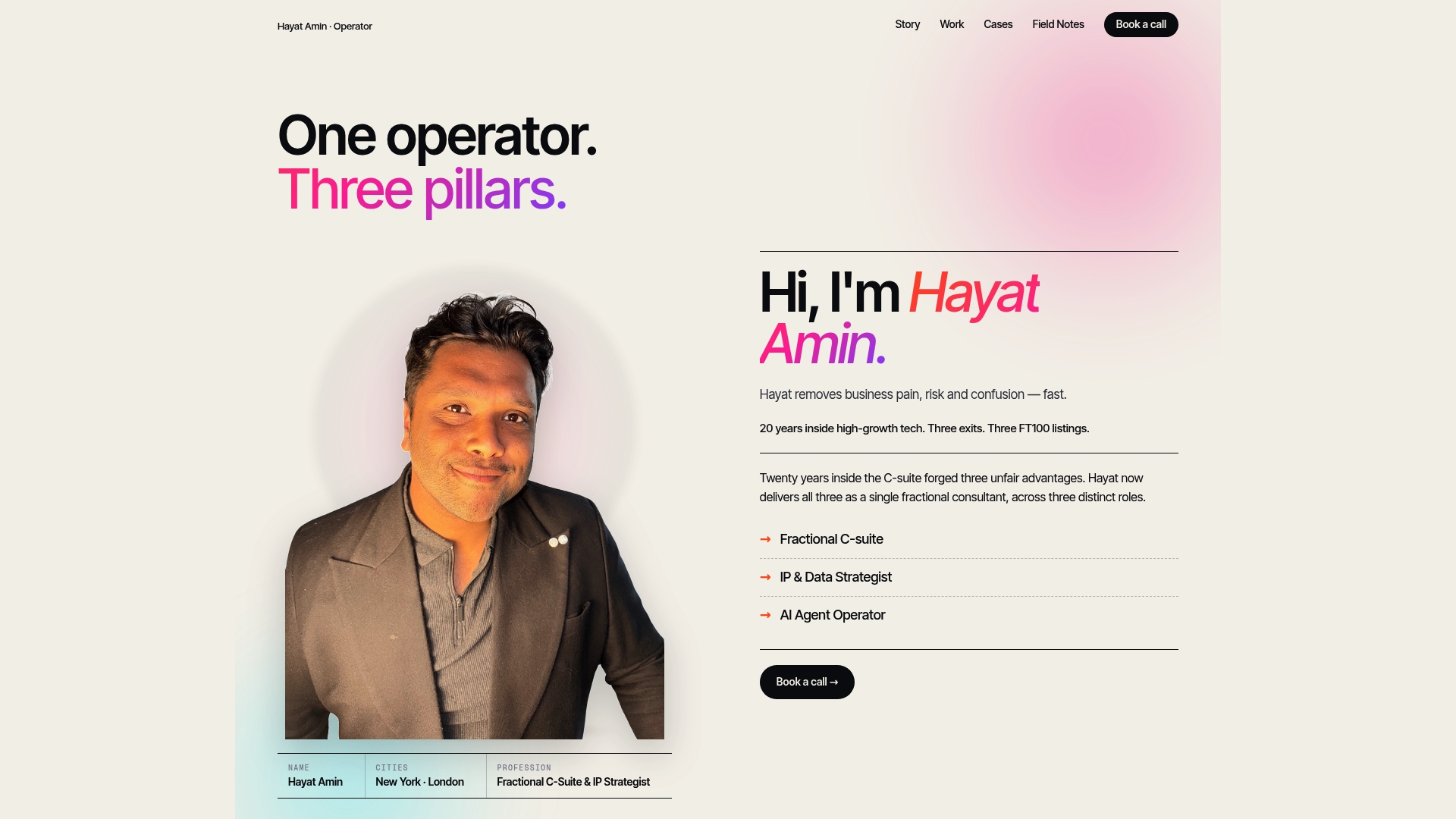
As a three-times exited CFO, Hayat Amin brings direct experience of what acquirers scrutinise during due diligence and how to structure a business to command premium multiples. The fractional CFO service covers exit modelling, cap table management, and financial narrative preparation. For founders who need to demonstrate operational efficiency at scale, the AI agent operator service deploys agents across finance, legal, and GTM functions to reduce headcount cost and improve unit economics before the sale process begins. Both services are designed to make your business more attractive to the buyers who pay the highest multiples. Reach out through Meethayat to discuss your exit timeline.
FAQ
What is the average ARR multiple for a tech acquisition in 2026?
Strategic acquirers pay 8x to 30x ARR depending on proprietary data assets, NRR, and sector. Companies in AI, cloud, and security attract the highest multiples.
How long does a tech acquisition typically take to close?
Strategic exits close in 6, 9 months, PE acquisitions take 15, 18 months, and IPO preparation requires 18, 36 months. Timeline depends on deal complexity and buyer readiness.
What made Skio’s exit so capital-efficient?
Skio raised only $8 million before selling for $105 million in cash. Low dilution, product-led growth, and clean financials produced a 13x return on invested capital.
Should I use an investment banker for my tech exit?
A banker adds value in a competitive multi-buyer process but is not necessary for every deal. The more important factor is building buyer relationships 18, 24 months before you intend to sell.
What is the biggest mistake founders make during an exit?
Signing an exclusivity agreement before the headline price is locked in the letter of intent. Buyers use due diligence to reduce the price, and exclusivity removes your ability to walk away or re-engage competing bidders.