Examples of AI workflow automation platforms in 2026


Choosing the right workflow automation software is one of the more consequential decisions an SME decision-maker will make this year. The market for examples of AI workflow automation platforms has expanded significantly, and the variety of pricing models, hosting options, and AI capabilities makes direct comparison genuinely difficult. This article profiles eight platforms in detail, presents a side-by-side comparison, and gives you a clear framework for matching the right tool to your operational context, budget, and technical capacity.
Table of Contents
- Key takeaways
- Key criteria for evaluating AI workflow automation platforms
- Examples of AI workflow automation platforms: eight platforms reviewed
- Comparison of platforms: features, pricing, and ideal use cases
- Practical recommendations for SMEs selecting a platform
- My perspective on AI workflow automation for SMEs
- Deploy AI workflows with the right operator behind them
- FAQ
Key takeaways
| Point | Details |
|---|---|
| Pricing models vary significantly | Task-based pricing can create unexpected cost spikes in multi-step workflows; forecast volume carefully before committing. |
| Agentic workflows need governance | Platforms offering human-in-the-loop approval controls reduce operational risk, especially for finance and compliance processes. |
| Self-hosting changes the maths | n8n’s self-hosted model eliminates platform fees entirely, making it cost-competitive for SMEs with technical resource. |
| Embedded workflows accelerate adoption | Pre-configured agentic workflows, as seen in Claude for Small Business, reduce setup time and lower the barrier to entry. |
| Match platform to skill level | Zapier suits non-technical operators; n8n and Glean suit teams comfortable with configuration and structured contracts. |
Key criteria for evaluating AI workflow automation platforms
Before comparing specific platforms, you need a consistent lens. These are the factors that matter most for SMEs operating with constrained budgets and limited technical headcount.
Integration breadth. The platform must connect to the apps your team already uses. A best AI workflow platform that requires you to migrate your CRM or replace your accounting software is not a practical option for most SMEs.
Pricing model and total cost. Task-based pricing can cause unexpected cost spikes in multi-step workflows. A three-step automation in Zapier consumes three tasks, not one. SMEs must forecast monthly task volume before selecting a plan, not after seeing the invoice.
AI feature depth. There is a meaningful difference between a platform that adds an AI button to an existing workflow and one that supports genuine agentic orchestration, where an AI agent plans, executes, and loops back based on outcomes.
Governance and approval controls. Agentic workflows with human approval balance productivity with governance. For any SME handling financial data, customer records, or regulated processes, this is not optional.
Self-hosting versus cloud. Cloud platforms are faster to deploy. Self-hosted platforms give you data control and eliminate per-task fees. The right answer depends on your IT capacity.
User-friendliness. Some platforms are built for non-technical operators. Others assume familiarity with JSON, API contracts, or scripting. Be honest about your team’s skill level before trialling anything.
Pro Tip: Run a cost simulation before signing up. Take your three most frequent multi-step workflows, count the total steps, multiply by monthly run frequency, and calculate your monthly task consumption on each pricing tier. The number often surprises people.
Examples of AI workflow automation platforms: eight platforms reviewed
1. Zapier
Zapier connects SaaS apps quickly and is the most widely recognised name in this category. Its strength is breadth. With thousands of app connectors and a no-code interface, it is the default starting point for non-technical SME teams.
The 2026 pricing structure offers a free tier of 100 tasks/month, with paid plans beginning at $19.99 per month. The critical constraint is that each step in a multi-step Zap counts as a separate task, so volume can escalate faster than expected. Zapier has also expanded its AI capabilities through Copilot-assisted Zap building and AI-step actions, but these remain add-ons rather than native agent orchestration.
Best for: SMEs wanting fast setup with minimal technical overhead and workflows that do not exceed moderate monthly task volumes.
2. Microsoft Power Automate
Power Automate is the natural choice for any SME already operating within the Microsoft 365 ecosystem. It connects natively to Teams, SharePoint, Outlook, Dynamics, and Excel, which removes most integration friction from the outset.

The platform’s Copilot integration in Power Apps embeds AI directly into business applications, so automation is contextual rather than bolted on. Users can trigger flows via natural language instructions, and the AI suggests next steps based on workflow context. For SMEs not running Microsoft infrastructure, however, Power Automate loses much of its appeal.
Best for: SMEs on Microsoft 365 who want AI-driven process automation without purchasing a separate platform.
3. n8n
n8n is the option that rewards technical investment. It offers a self-hosted deployment model, meaning you run the platform on your own infrastructure and pay no per-task platform fees. This fundamentally changes the cost structure for SMEs running high-volume or complex workflows.
Beyond cost, n8n supports genuine AI agent orchestration. You can build multi-agent pipelines, connect to large language models, and define conditional logic at a level of granularity that Zapier does not expose. n8n supports self-hosting and AI agent workflows natively, making it one of the more technically capable options in this list. The trade-off is clear: you need someone on your team, or an external operator, who is comfortable configuring nodes, managing credentials, and handling infrastructure.
Best for: SMEs with technical resource or an external AI agent operator who want cost control and deep workflow customisation.
4. Anthropic Claude for Small Business
Anthropic has taken a deliberately SME-focused approach. Claude for Small Business includes 15 pre-configured agentic workflows covering finance, operations, sales, marketing, HR, and customer service. These workflows integrate into common SME applications and include approval controls baked into the design.
This is a significant differentiator. Rather than building from scratch, SMEs can activate pre-approved workflow templates and begin operating with governance built in from day one. The approval control architecture means a human must sign off on defined actions before they execute, which is exactly the kind of structure you want for financial or compliance-adjacent processes.
Best for: SMEs wanting rapid deployment of agentic AI workflows without custom configuration, particularly across finance and operations functions.
5. OpenAI workspace agents
OpenAI’s workspace agents in ChatGPT run scheduled, shareable tasks such as weekly reporting, data extraction, and summary generation, integrating with tools like Slack. The key operational benefit is persistence and reusability. Agents are not one-off interactions; they are configured once and run on schedule or trigger.
OpenAI positions workspace agents as persistent, reusable workflow components shared across teams, which directly reduces the ad hoc reinvention that plagues most SME operations. A weekly revenue summary agent, for example, can be built once by one team member and shared across the finance and leadership team permanently.
Best for: SMEs already using ChatGPT who want to extend it into repeatable operational tasks without adopting a separate platform.
6. Glean Actions
Glean occupies a specific and underappreciated niche: knowledge-oriented automation. Glean provides typed input/output Actions that connect to documents, tickets, and knowledge bases, enabling workflows such as searching internal records, opening support tickets, or extracting data from contracts.
The governance model is notable. Glean’s Workflow mode is recommended for fixed, repeatable processes requiring explicit approvals, while Auto mode handles open-ended objectives. For SMEs managing document-heavy processes, this distinction matters. The typed contract model for Actions also means the platform enforces predictable behaviour rather than leaving the agent to interpret inputs freely.
Best for: SMEs with significant document or knowledge management workflows who need structured, auditable automation.
7. ServiceNow Now Assist
ServiceNow is enterprise-grade by design, and Now Assist brings agentic AI into IT service management and complaint handling. Now Assist orchestrates specialised agents with step-based approvals, outcome classification, and audit trail compliance. For SMEs in regulated industries, the audit trail alone justifies the evaluation.
The platform is more complex and more expensive than the others on this list. It is included here because larger SMEs in financial services, healthcare, or professional services often operate workflows of sufficient complexity to warrant the investment. This is a platform you adopt when your workflow requirements exceed what lighter tools can handle.
Best for: Larger SMEs or those in regulated industries needing enterprise-grade AI workflow management with full audit capability.
8. Domo Workflow Generator AI Agent
Domo’s AI agent handles loops, parameter mapping, and debugging to generate complete, deployable workflow packages from high-level instructions. Rather than requiring manual configuration of each step, you describe the workflow objective and the agent generates the structure.
This is a meaningful reduction in setup time for complex workflows. The practical implication for SMEs is that you can prototype and deploy faster, with less dependence on workflow configuration expertise. Domo’s existing strength in business intelligence means the generated workflows can connect directly to dashboards and data pipelines, which is useful for reporting and FP&A use cases.
Best for: SMEs already using Domo for data and reporting who want to extend into AI-driven workflow generation without heavy manual setup.
Comparison of platforms: features, pricing, and ideal use cases
| Platform | Pricing model | AI/agentic features | Integration breadth | Technical skill required | Best SME use case |
|---|---|---|---|---|---|
| Zapier | Task-based from $19.99/month | AI steps, Copilot builder | Very broad (thousands of apps) | Low | General automation, non-technical teams |
| Power Automate | Per-user licensing (Microsoft 365) | Copilot embedded, flow suggestions | Microsoft ecosystem + connectors | Low to medium | Microsoft 365 shops |
| n8n | Self-hosted (infrastructure cost only) | Full agent orchestration | Broad via nodes | High | High-volume, custom workflows |
| Claude for Small Business | Subscription (Anthropic pricing) | 15 pre-built agentic workflows | SME app integrations | Low | Finance, ops, HR workflows |
| OpenAI workspace agents | ChatGPT plan-based | Scheduled agents, team sharing | Slack, web, data tools | Low to medium | Recurring reporting and summaries |
| Glean Actions | Enterprise pricing | Typed contract Actions, dual modes | Knowledge and ITSM tools | Medium | Document and knowledge workflows |
| ServiceNow Now Assist | Enterprise licensing | Multi-agent orchestration, audit trails | ITSM, enterprise systems | High | Regulated industry workflows |
| Domo Workflow Generator | Domo platform pricing | AI-generated workflow packages | Domo BI and data connectors | Medium | Reporting and FP&A automation |
Pro Tip: Do not evaluate platforms in isolation. Map your top five workflows by frequency and complexity first, then check which platforms handle all five natively. A platform that covers four out of five is far more practical than one that excels at two.
Practical recommendations for SMEs selecting a platform
The right choice is rarely the most popular platform. It is the one that fits your workload, budget, and team capability.
-
Audit your workflow volume first. Before you evaluate any platform, count your monthly automation runs and average steps per workflow. Task-based pricing complexity makes this step non-negotiable.
-
Start with pre-approved templates if governance matters. Embedded pre-approved workflows reduce adoption risk. Claude for Small Business and Power Automate both offer this entry point.
-
Separate ease of use from long-term control. Zapier is easy but constrained at scale. n8n is harder to set up but gives you full control and lower ongoing cost. Be clear about which matters more in your context.
-
Plan for AI feature growth. The platforms adding agentic capability today will be the standard in two years. Prefer platforms with a visible AI agent roadmap over those treating AI as a marketing add-on.
-
Trial with a real workflow, not a demo. Take your most painful manual process and build it on the platform during the trial period. That test reveals integration gaps, pricing surprises, and usability limits faster than any vendor demo.
My perspective on AI workflow automation for SMEs
I’ve evaluated and deployed AI automation tools across multiple SME contexts, and the pattern I keep seeing is the same. Decision-makers underestimate two things: the real cost of task-based pricing at scale, and the governance overhead of deploying agents without approval controls.
Most SMEs I’ve worked with start with Zapier because it is accessible, and that is a reasonable entry point. But when their workflow complexity grows, the pricing structure becomes a problem nobody planned for. The smarter path is to model your task volume honestly at the outset and consider whether a self-hosted option like n8n, or a purpose-built agentic platform, is actually cheaper over twelve months.
What I’ve found works best for SMEs with limited technical resource is starting with embedded, pre-configured workflows. Claude for Small Business and Power Automate Copilot both let you get operational value without deep configuration expertise. The approval controls in these platforms are not just a safety feature; they are a trust-building mechanism that makes your wider team comfortable with AI-driven decisions.
The misconception I hear most often is that AI workflow automation is inherently complex to set up. It is not. What is genuinely complex is designing the right governance architecture and forecasting costs accurately. Those are strategic decisions, not technical ones, and that is where most SMEs benefit from outside expertise rather than more software trials.
, Hayat
Deploy AI workflows with the right operator behind them
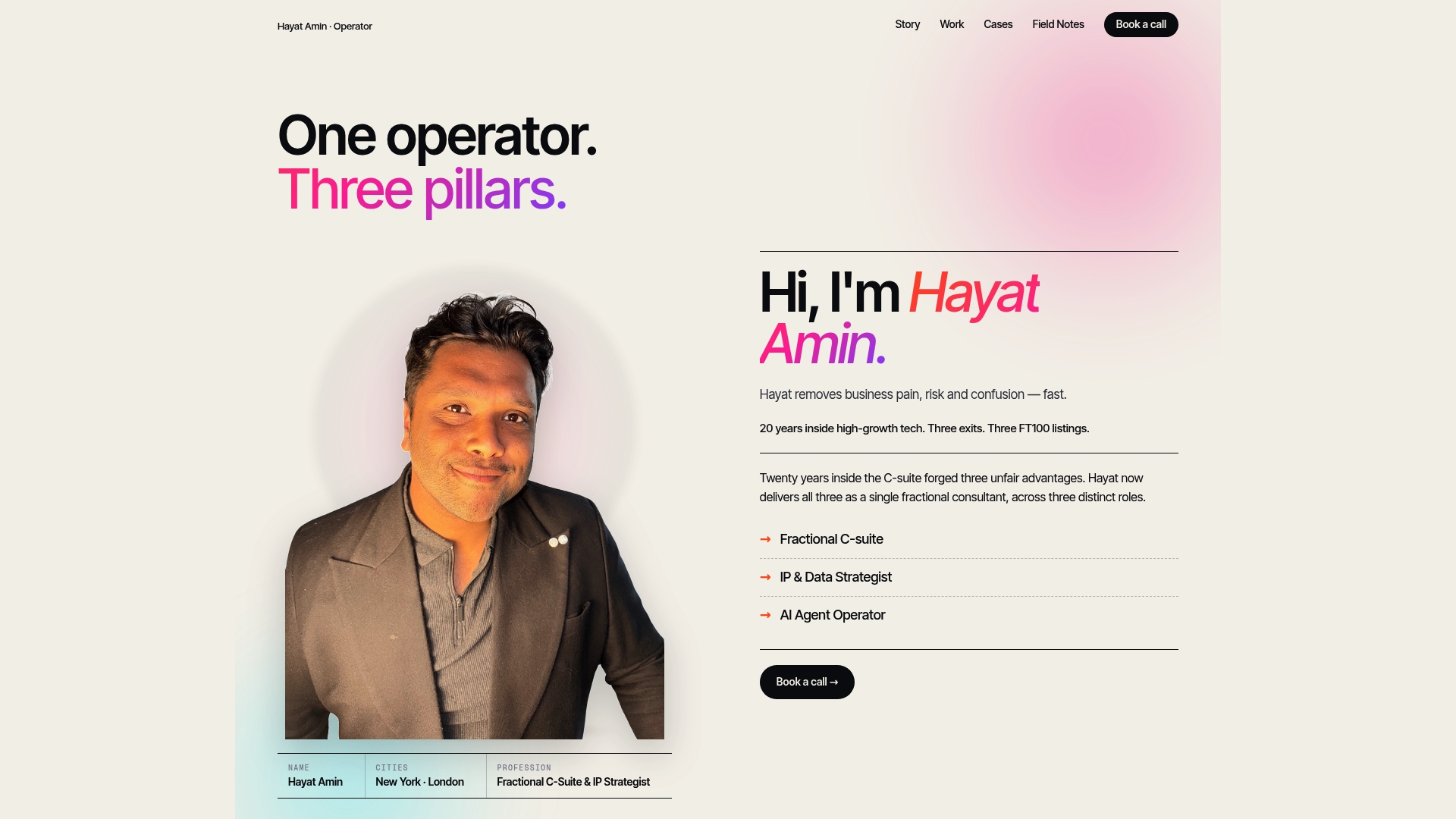
The platforms above are tools. What determines whether they deliver operational value is the design of the workflow architecture and the governance model around it. Meethayat works directly with SMEs as an AI agent operator, building and running agents across finance, legal, and GTM functions.
If you are deciding between a consultant who advises and an operator who builds, the distinction matters significantly. You can read a detailed breakdown in the AI agent operator vs AI consultant guide, which covers exactly what each role delivers and when each is the right hire. For SMEs ready to move beyond evaluation and into deployment, the hire an AI agent operator playbook gives you a step-by-step process to follow.
FAQ
What are the best AI workflow automation platforms for SMEs?
The strongest options for SMEs in 2026 include Zapier for non-technical teams, Microsoft Power Automate for Microsoft 365 users, n8n for cost-conscious teams with technical resource, and Claude for Small Business for pre-built agentic workflows with approval controls.
How does task-based pricing affect SME automation costs?
Each step in a multi-step workflow counts as a separate task, so a five-step automation runs five tasks per execution. At scale, this adds up quickly. SMEs should model their monthly task volume before committing to a task-based platform.
What is the difference between workflow mode and auto mode in AI agents?
Workflow mode uses fixed step sequences with explicit approvals, while auto mode allows the agent to pursue open-ended objectives with less predictability. For regulated or sensitive SME processes, workflow mode is the appropriate choice.
Do SMEs need technical expertise to use AI automation platforms?
Not always. Zapier, Claude for Small Business, and Power Automate are designed for non-technical users. Platforms like n8n and Glean require moderate to high technical skill, or the support of an experienced AI agent operator.
What is an agentic workflow?
An agentic workflow is an automated sequence where an AI agent plans and executes multiple steps towards a defined goal, often with conditional logic and human approval checkpoints. It goes significantly further than a simple trigger-and-action automation.